[ad_1]
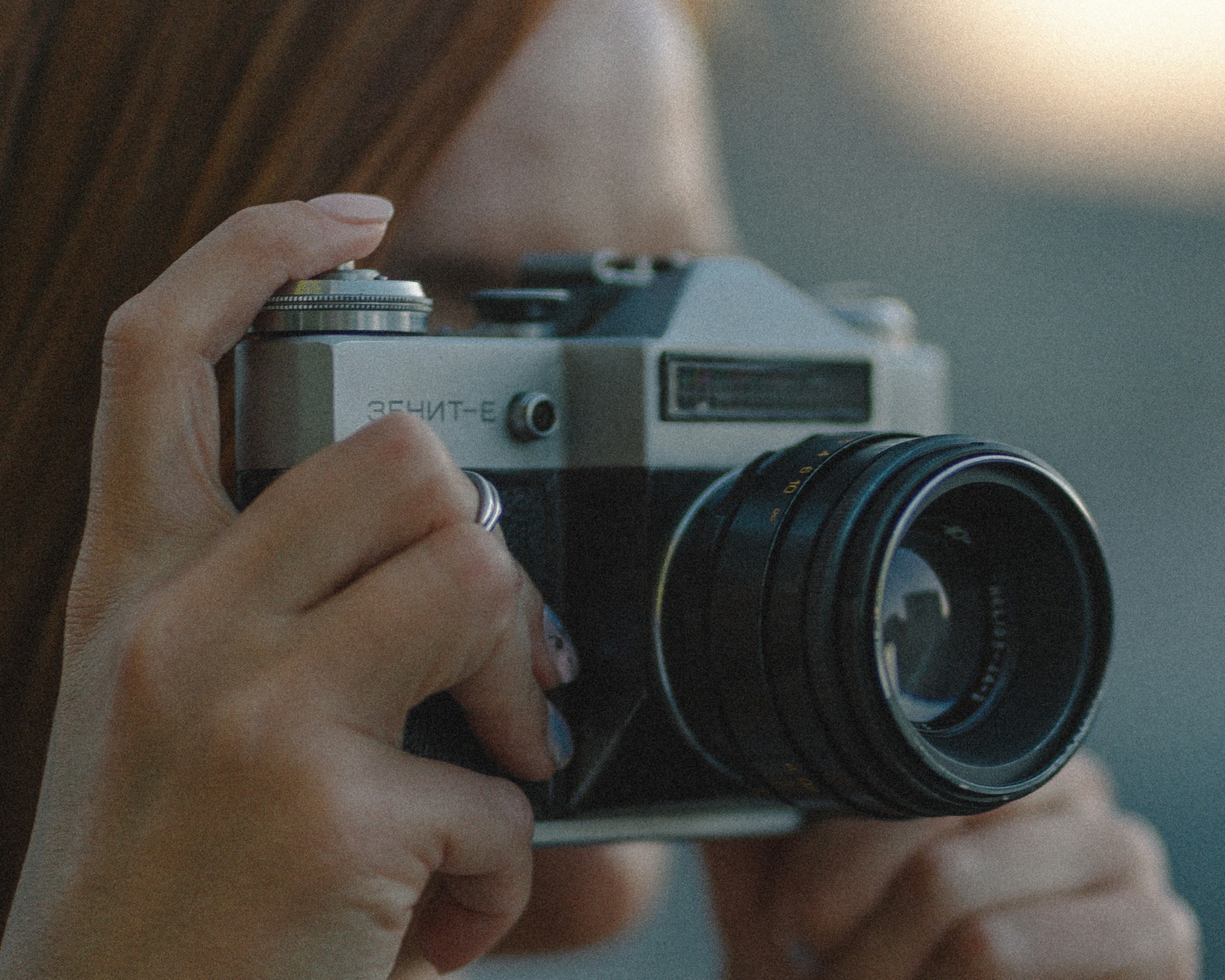
Do you remember your first camera? I certainly do. It was a Soviet built Zenit 11 and like most things Soviet, it was built like a tank. The thing is though, I can still clearly remember everything about my first days with that camera. As clear as day.
That’s even more remarkable when you know those days were coming on 42 years ago. There is virtually nothing else from that period of my life that I recall so clearly. So why did a hefty chunk of Soviet pig iron have such an effect on me? Today we are going to look at how your first camera will shape your photography.
First Impressions Count.
My first impressions of the Zenit 11 came in the local camera store. In front of me was the Zenit and an Olympus Trip, by far the most popular camera of its day. It was my 16th birthday and I could choose one of them. Both were similarly priced, but the Zenit looked like a “proper” camera. The type of camera Hollywood stars would use in spy movies.
The feeling I got from looking and picking up that Zenit was one of excitement mixed with bewilderment. The excitement of this shiny new gadget and the bewilderment of all the dials and buttons on it. The large logo emblazoned on the pentaprism hinted at an unknown. It added to the mystic of this shiny black box. Of course as experience built, I became to realise that logo, was not the pinnacle of camera technology, but that’s a whole other story.

I am sure everyone of you, from relative newcomers to seasoned and experienced togs, will have experienced similar feelings. I don’t recall the camera even coming in a box, but many of you, at one stage, will have unboxed your cameras, casually thrown the manual to the other side of the room then spent twenty minutes trying to work out how to attach the lens to the body. If you are still passionate about photography today, it was those few minutes, months, years or decades ago that defined that passion.
Taking Those First Images.
When I got my Zenit home, I was eager to understand everything about it. But first I needed to shoot with it. Unlike today, I had no fail-safes, no automatic modes, no autofocus. I had literally no idea how to load a film let alone what the aperture and shutter speed dials did. There were strange numbers on the top plate, they might as well have been hieroglyphics for all I knew.
Like me, you will have experienced the same desire. The desire to skip any understanding of the controls just to get an image. How that image came out will also define how you go forward with photography.
For me, it was a picture of a friend’s dog. In an age when the Internet is defined by cat and dog pictures, it’s difficult to imagine the massive impact an image of a friend’s canine had on me. It’s also, perhaps, difficult to imagine the anticipation in waiting to see that picture. It was several days perhaps a week before I got the prints back. But what prints they were.

The dog, a beautiful black lab whose name long escapes me but whose image is burned onto my retinas. The photos were so clear, so colourful, deep blue sky, rich green grass and the deep blacks of the aforementioned lab. Despite the fact that I had no idea how I had created these images, I was utterly hooked. And here’s the most salient point to this. That very first role of film helped define my photographic style, one that I have subconsciously honed over the following 40 years.
Your first images will be very much the same. Go back to the first shots you took with your first “proper” camera and I wager you will see elements of your own photographic style as it is today.

Your First Camera Will Define Your Technique
Beyond those first creative flourishes, your first camera will completely define your approach to photographic technique. The Zenit, as I have already mentioned, was entirely manual. There wasn’t even a built in meter per se. It was a selenium cell on the front of the pentaprism, just below the iconic Zenit logo. It worked in much the same way as handheld light meters of the day. You lined up a needle and read off the exposure.

To do that, I had to understand exposure. I had to learn the relationship between shutter speed and aperture. I had to know what ASA (ISO) my film was and how that would affect my image quality. In short, it taught me the essential basics of photography.
Many of you reading this will have picked up your first camera in the digital age. To be honest, the need to understand exposure (at first) is not essential when starting photography these days. Modern cameras have that sorted for you. However, you will need to know the differences between JPEG and RAW, the effect of white balance, and the way to use different autofocus modes. Those modern functions are essential to digital photography and will define the way you think and shoot way into the future.

Your Experiences Will Define Future Photographers
When I meet up with new photographers, produce YouTube videos, make training courses or write even in my articles here on Light Stalking, I am bringing my 40 years of experience to those newcomers to photography. That experience is very much built on my early days in the craft and as such I am able to impart my understanding of exposure, shooting manually and manual focus to newer photographers.
In the same way, people starting now, will pass on the concept of JPEG and RAW et al to photographers kicking off their journey in 5-10 years time. The technology will have changed, the priorities in getting a good photo will have changed but the fundamental building blocks to getting that good photo will always be with us.
So think back to those halcyon days with your first camera, channel the thoughts and experiences that you gained with that camera and bring them forward into the future. The good photographers of the future will be building their abilities on your own experiences.
Further Reading
[ad_2]
Source link
دیدگاهتان را بنویسید