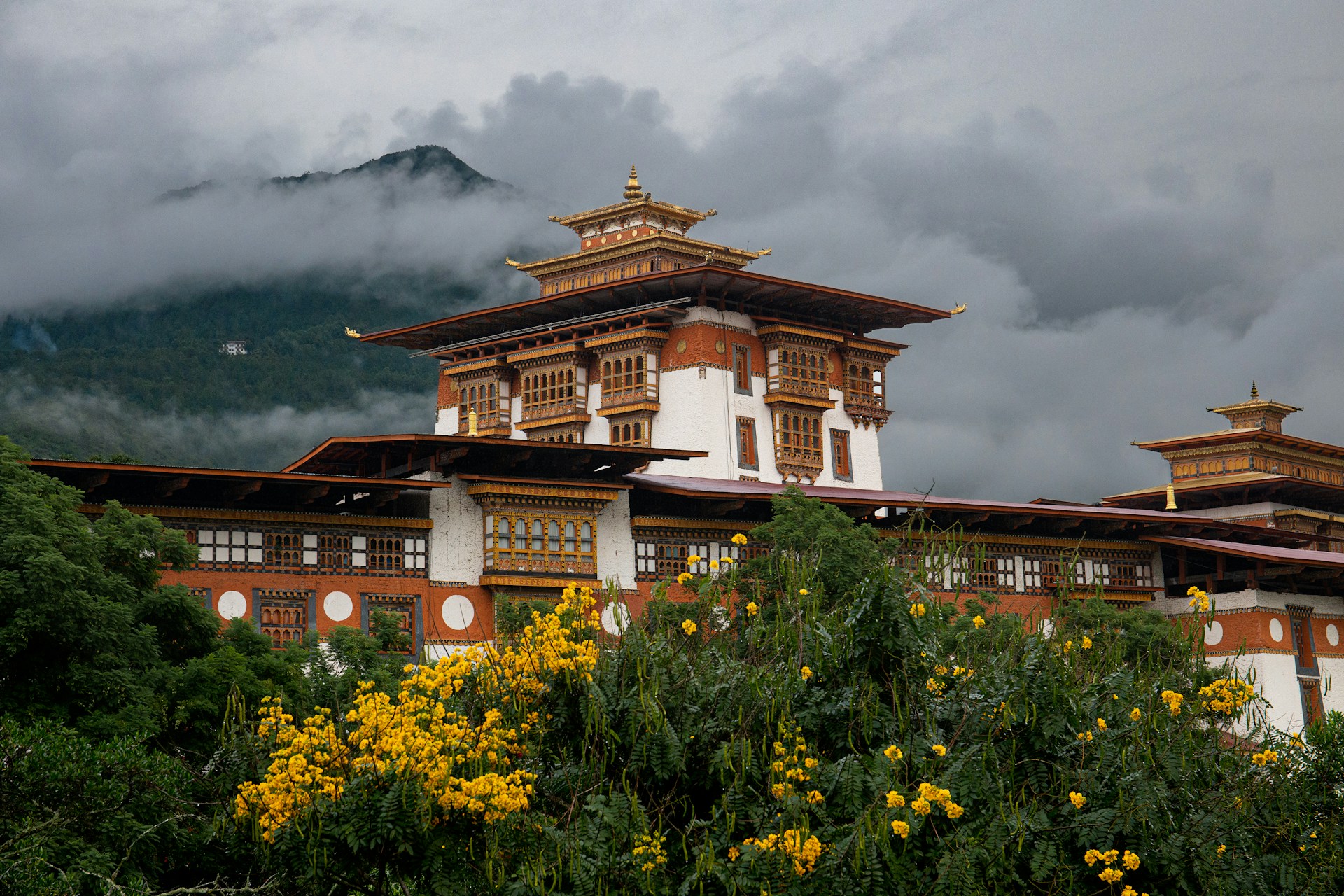
There are religious architectural structures almost all around the world. When talking about religious structures or architecture, it includes churches, cathedrals, mosques, synagogues, temples, pagodas, monasteries, etc. Religious architectural photography is a bit complicated because the architecture itself can be very detailed both inside and out.
When capturing photos of religious places, one needs to compose carefully, make use of the available light and use the right camara settings and gear wisely in order to get the best results. A tripod will be of great help when shooting indoors and a wide angle or tilt-shift lens to get the entire building in the frame, or a moderate focal length to capture the architectural details.
Here are 24 religious architectural photos, that speak of their time and place.
Architectural photographs are great subjects for black and white photography. It is advised to not shoot directly in black and white, but to capture the colours in raw format and then convert it to black and white when post processing. There is more to converting an image to black and white, than just dragging the saturation slider all the way down to the negative end. If you wish to produce dynamic black and white images, check out this eBook, “Better Black And White” by Photzy, that will teach you how to properly convert a colour file to a black and white image.
Jure Tufekcic
Sonia Dauer
Manasa Putnala
Fernando Lavin
Roozbeh Eslami
Danylo Istominov
Andy Bridge
Miguel Baixauli
When capturing an image for black and white conversion, you will need to decide when photographing the structure itself, whether the image will work well in black and white. Good light and tonal range in the image is very important. Contrasting colours do not always convert to contrasting tones in black and white. If you are starting out in black and white photography, check out this eBook, “Better Black And White” by Photzy, which is a practical follow along guide that will help you to create compelling black and white shots every time.
Ricardo Gomez Angel
Jason An
Pond Gotishatiankul
Siborey Sean
Mich Stella
Benjamin Merkle
Raul Taciu
Sanjar Ganiev
When you are out in the field, depending on the light and the colours that are right in front of you, you should be able to decide whether a shot will work great in black and white. Learning how to look in black and white will greatly help and there are also a few post-processing tricks that will help you get the best results. If you wish to take your black and white photography seriously, check out this eBook, “Better Black And White” by Photzy, to understand tone, contrast and master black and white photography.
Watch the 7-minute video above, or keep reading if you prefer the written word.
Here’s a question that keeps me up at night:
Why do photographers get so intimidated by editing down to their best images and the “now what?” that comes once we put the camera down? And are we missing really important creative opportunities because of this?
For years, I’ve been signing my letters to you with the words “for the love of the photograph,” because I do. And so you do you. Nothing else explains the time and money we spend on making them. No doubt about it, this is a labour of love.
But I wonder if we love the photographs we are going to make—the next ones—way more than the ones we’ve just made. We so often move on to the next thing too quickly. The next project. You know the one: the one for which you need that new lens. Or tripod. Or flash. I’m the same way, and there’s nothing wrong with creative momentum or new gear.
But I think if we loved the photographs we’ve just made as much as the ones we’re about to make, we’d make stronger images and have a richer photographic life.
So, here are three ideas, or three ways, that we can carry the love of the photograph and the making of photographs, a little further and in the process, learn more, make stronger photographs, and find more joy in all of it.
Spend More Time With Them
In my last video, I suggested you consider doing smaller edits when you’re working on a project. I like daily edits when I’m photographing, but whatever “smaller edits” mean to you and your work, I think you’ll benefit from doing it. I also think multiple edits are important, and though I suggest spending more time, this multiple-edit approach is actually more effective and, in the end, takes less time—and is more enjoyable and effective than one big marathon edit session (that you may never get around to).
When it comes to choosing my keepers, I never completely trust my first instincts. We choose our best work by looking through all kinds of different filters. There’s no telling what I might have been looking for when I did my first edits—was I looking for colour images or vertical images or images that tell a certain story?—so it’s always worth giving my images another look, and doing so at least three times over a few months rather than doing one gigantic, mind-numbing edit session to find the best of my work.
One of the best reasons for doing this, especially if you’re doing smaller edits as the work progresses, is that what a project looks like at the end and what it looked like at the very beginning are usually very different. So going back to do another edit, once you’ve seen where the project is leading can be very effective in finding new images that work with that project.
Our work grows and changes, as does how we look at that work. I know we get excited by the next thing, but one of the best ways to make new photographs when you can’t be out there with the camera is to revisit older work. Do another pass. See what comes to the top now that you’re seeing it with fresh eyes months or even years later.
I think not being in such a hurry with finding the best of our photographs, of revisiting them and giving them a second or third chance after we’ve shot them, is a stronger way of editing than the way it’s often done: one big marathon edit session after which we call it done and never give the un-selected images another glance. That’s the first way we can give our photographs a little more love, and the result is stronger final images.
Do More With Them
I used to tell anyone who would listen to “print yer damn work!” Maybe you don’t make the prints yourself, that’s OK; I don’t anymore, either. But I do have it printed by someone who is really good at printing, and getting my work in print makes me a better photographer.
There’s also such joy in holding the work and sharing it in tangible ways. When’s the last time you made a book, a slideshow or a collection of prints to pore over? When’s the last time you submitted them to a magazine or swapped out the prints on your wall? When is the last time you did something with them?
If you want to love your photographs more, consider making something with them. The benefits are huge, and they’re practical. When we output our work, we spend more time with it.
When that output is larger than what we might put on Instagram, or we have to spend money to make it happen, I think we’re more critical of that work. We see the flaws and that keeps us honest and growing in our craft.
I’ve found knowing what I will make with my photographs gives me an end game of sorts. It makes the edits easier when I know what I’m choosing my best images for.
Protect Them
If we love something, we protect it. One way to do that is with an archive of prints, but let’s talk about back-ups for a moment.
It seems like every other week I hear another story of a photographer who lost all their images because a hard drive crashed. I’ve heard stories of theft and fire or water damage as well, and I can’t for the life of me understand why photographers will spend so much money on gear and balk at buying whatever sized hard drives they need to create a simple backup of the work they’ve invested so much in.
If your computer crashed right now or your main hard drive failed, how easy would it be to get back up and running without missing a beat or losing an image?
In case it’s been a while, this is just a reminder to consider giving your backup plan a second look. And if you aren’t current with your backups, maybe to take a moment a do that, you know, for the love of your photographs.
I’d love to hear from you on this. What do you do with your photographs once the camera goes back in the bag? You can be part of the conversation in the comments below.