برچسب: Red

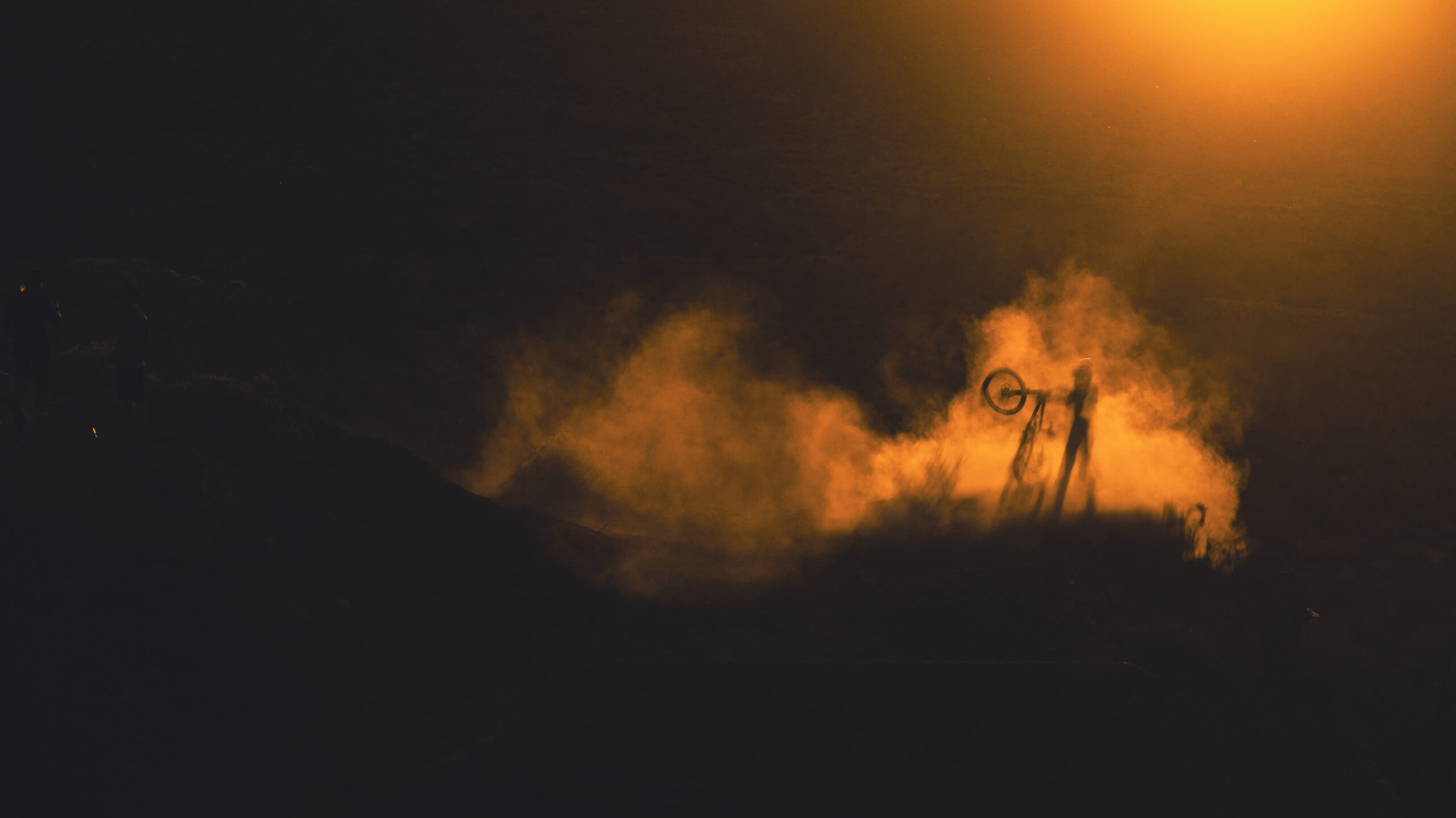
  • Red Bull Rampage – A Photo Editor

    [ad_1]

    https://www.youtube.com/watch?v=2QOtuQ0Ox3s

    Heidi: Graham Agassiz said that even early on, you “always know where to be … you’re never getting in the way or calling out tricks” — how do you develop that sense of timing and positioning in these high-risk environments?
    Paris: Developing a sense of positioning and not being in the way is really just being very observant and listening to riders. Staying in the shadows a bit, but having ears and eyes on what’s going on, which can sometimes be a lot of different things at once.

    How much do you choreograph vs. adapt in real time? In other words, do you visualize every shot beforehand?
    A lot is happening live so it really depends on where the light is and people are riding. But that said, there are shots I like to scout ahead of time before event day and have a good plan to where to go and what lens I should be using so I can make a switch while I am on the fly during the event. But most of the time it’s adapting in real time, which goes back to being very observational to calculate what’s going on and where.

    Tell me about a shot you didn’t get — what went wrong?
    The worst miss was watching Brandon Semenuk on his winning run tailwhip off a massive drop which was a crazy move at the time with my own eyes and not from my camera. It was really dejecting as I was blind to the action, meaning I could not see him coming up to the drop and there was a delay that the announcers didn’t make clear he was on course. He just came off the drop and I was like “F*** missed that one”

    You have spent nearly 10 years perched on these cliffs — hiking 10+ miles a day, carrying 50-lb camera bags, working sunup to sundown. What keeps you going through that physical grind, and how do you maintain creative energy under those conditions – other than the endless quest for the 1 in a million shot?
    It takes a lot out of you shooting the event, we are on site for about a 12-hour day and then still have to edit images for another 2+ so maintaining and keeping energy is really important. Especially during event day it can be really hot out and no break, so just managing water intake and food is super crucial. I generally am in the gym a lot leading up to the event to maintain a solid amount of fitness to be able to withstand the physical demand.

    What changes have you seen in how you approach your craft — from planning, gear, or mindset — and can you point to a moment when your style or process noticeably shifted?
    I’ve gotten more efficient over the years but also it still is very much the same madness in the 12 years I’ve photographed the event. Just more tuned into what riders are doing and what kind of images I am looking for. I’ve also started running lighter and more minimal gear kits, knowing what I need to go into it and don’t have to carry as much heavy gear around.

    With more conversations now about including women in high-stakes freeride events (e.g. Red Bull’s “Formation” as a step toward women’s representation) — how do you see your role (as a visual storyteller) in supporting or driving that inclusion, and how has your approach to photographing women in these environments evolved over time?
    I was lucky enough to photograph the first Formation event in 2019 which was awesome to be apart of at the time and witness their talents. With the full on Rampage event now for women I’ve been trying to showcase how gnarly some of the features are they are riding now that no other male riders even would touch back in 2015 when they were at the same venue which is really awesome to see.

    How do you approach “landscape-first” compositions in Rampage settings — balancing epic environments with intense human action — and how has that balance shifted over the years?
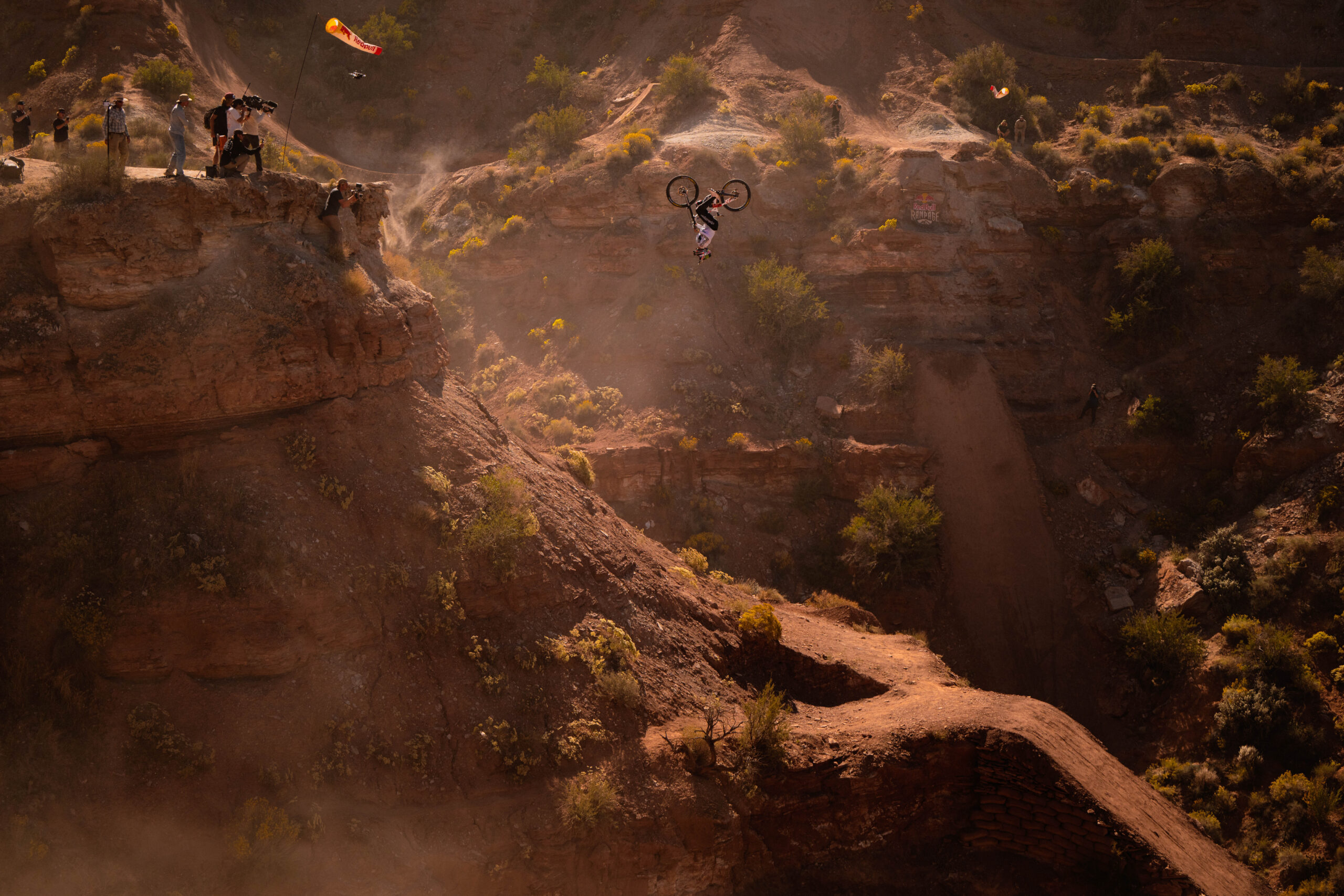
    Rampage is so expansive and has massive terrain that needs to be showcased in a certain way to really do justice to the scale of the action. There’s times where a tighter trick shot off a jump is important but also a wider landscape style to show the sheer scale of what they’re riding down.

    You’ve lived in Bellingham, WA for a while now, and you also fly airplanes, snowboard, explore wilderness. How do your off-mountain passions (flying, snowboarding, exploring) inform your perspective and instincts when you’re shooting in extreme mountain terrain at Rampage?
    I do a lot outside of just shooting and really love being in the mountains doing the sports I enjoy photographing. Flying for me as well has been an outlet for my own “thing” that is unique and extremely passionate about doing. Snowboarding really helps me think about Rampage a bit mainly just seeing photos from Blatt and other snowboard photographers approach to shooting big mountain terrain to apply that into a Rampage environment.


    [ad_2]

    Source link
  • Isotta Launches Housing for RED V-Raptor X Cinema Camera

    Isotta Launches Housing for RED V-Raptor X Cinema Camera

    [ad_1]

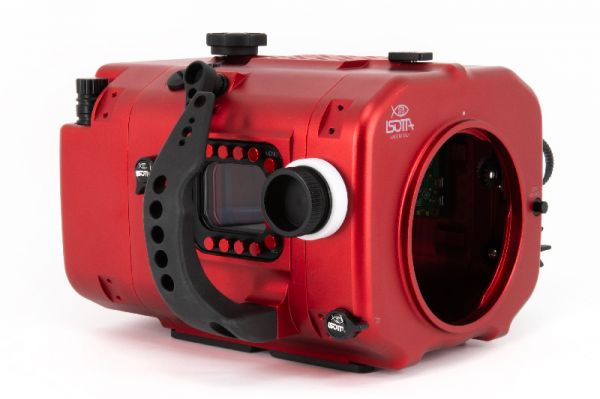
    Red housing for a RED camera? Yup, in a surprising move, Isotta has unveiled its first housing for a pro cinema camera—the top-of-the-line V-Raptor X. Featuring the flagship DSMC3 modular body, the V-Raptor boasts an 8K VV 35.4-megapixel global shutter sensor offering 8K/120p and 4K/240p recording and 17+ stops of dynamic range. Previously sporting an adaptable Canon RF lens mount, the camera is now also available with Nikon’s Z mount for even more lens flexibility. (Remember this?)

    Hewn from aluminum, anodized and painted signature red, the Isotta housing for the RED V-Raptor X looks to be an impressive piece of kit. Sporting Isotta’s classic single-handed open/close knob and built around the company’s B120 port system, the housing features a back that is entirely detachable from the front, and a lockable tray, allowing for easy insertion of the camera. All buttons and removable parts have double O-ring seals, and there’s a moisture sensor with LED indicator fitted as standard. As well as three M16 ports, there are two M24 ports, allowing straightforward connection of a monitor such as the Atomos Ninja V+. There’s also a full complement of M6 holes for attaching brackets, tripods, handles, etc.

    Available now from retailers such as Backscatter, the Isotta housing for the RED V-Raptor X is priced at $8,965.


    When purchasing underwater photography equipment like the products mentioned in this article, please support DPG by supporting our retail partner—Backscatter.com.


    PRODUCT INFORMATION

    RED V-RAPTOR [X]

    Technical Data

    • Red color anodized aluminum body;
    • Ergonomic side handles, adjustable (via optional accessory);
    • Three M16 holes, one M24 hole and one M24 hole for using accessories such as vacuum systems, monitors;
    • Back housing completely detachable from the front housing;
    • Tray with lock for the easy insertion of the camera;
    • Single-hand closing knob for the back of the housing;
    • Aluminum buttons at the buttons with window for viewing the menu display;
    • Magnetic buttons and levers in aluminum for electronic control of the V-Raptor [X];
    • Double O-Ring seals on all buttons and removable parts;
    • Moisture sensor with LED indicator (replaceable battery);
    • Removable port B120 bayonet;
    • Safety lock on the porthole to prevent accidental opening;
    • Wide, rubber covered feet for solid footing on boat floors or sea floor;
    • Upper and rear M6 hole grid to apply various accessories (spotlight, spheres, handle, etc.);
    • Four M6 holes located on housing bottom side for different accessories such as brackets or tripods
    • Four pairs of M5 holes per side for attaching balls with plate;
    • Prepared for ISOTTA vacuum system (not included);
    • Working depth: 100 meters;

    Commands

    • ON/OFF lever of the RED V-Raptor [X];
    • Ergonomic mechanical lever for movie shooting button, easy to use even with gloves;
    • Movie shooting button (REC);
    • Lens release button;
    • Filter dial;
    • Zoom knob;
    • Focus knob;
    • Port safety lever;
    • Menu navigation buttons;
    • AutoFocus lever;
    • ISO+/ISO- lever;
    • Diaphragm +/Diaphragm- lever;
    • FPS+ button;
    • FPS- button;
    • White Balance + button;
    • White Balance – button;
    • Shutter + button;
    • Shutter – button;
    • Playback button;
    • Auto White Balance button;

    Optional

    • Ninja V+ monitor housing;
    • M28x1 bulkhead;
    • Connection cable;
    • XL adjustable balance tray;
    • Vacuum system;
    • Handles extension;

    Spare Parts

    • Set O-ring for RED V-Raptor [X] housing;
    • 1895 – Housing front lid B120;
    • 1905 – M16X1 cap;
    • 3352 – M24X1 cap;

    What Is Included

    • Housing;
    • Front lid;
    • Handles;
    • Humidity sensor;
    • Replacement O-ring kit;
    • Silicone lubricant 15gr / 0,5 oz;
    • Warranty: 2 years manufacturer’s (excluding batteries);


    [ad_2]

    Source link

  • Symbolism, Visual Narratives and Bright Red!

    Symbolism, Visual Narratives and Bright Red!

    [ad_1]

    Welcome to the Light Stalking weekly community wrap-up!

    Intuitively, one stumbles into the realm of visual language when thinking in photographic terms. However, the catch gets clearer when we attempt to justify our craft by elaborating on how images are capable of telling stories just like written text or verbose talking does. And that’s the thing we need to attend in order to fulfil our bound for narrating something through the means of a photograph.

    Nowadays, photographs offer raw data and work as truthful statements of how prone to visual language we humans are. As a species, we are capable of digesting three types of visual entities. In a nutshell, these are signs that can be split into icons, indications and symbols.

    Icons are signs that resemble an object, indications are signs that are causally related to their object and symbols are signs that have no inherent connection with their represented object. For example, this 🔥 emoji resembles fire; and smoke in the distance might indicate to us a fire somewhere far away. Curiously enough, the aforementioned word “FIRE”, is a symbol some of us English speakers understand as the physical phenomenon linked to combustion.

    Now, photographs are hard to pinpoint just to one of these three, and are better understood as containers of signs which might work as icons, indications, or symbols. The trick here is to think beyond the myth that Western civilisation understands better images by reading them from left-to-right and the other-way around for those who grew up in the eastern hemisphere.

    As the bearer of signs, photographs are, it feels cautious to distrust that unfounded tale about how we humans interpret such complex information. Photographs simply can’t work that way and therefore follow a distinct reading logic. However, such uncooked information needs some processing and that’s when the story comes into play; one needs to be certain about the message being shared with the world when posting something online.

    The old saying about how an image is worth more than a thousand words, brings light amidst this ai-generated realm we are being pushed into. Thanks to Peirce and Barthes —who’s readings have enlightened my understanding on how photographs are capable of telling stories— I advocate for investing in visual literacy at all age levels.

    Covered that, we can follow how our theme on single-frame storytelling developed for this past week! 

    For it, Diane turned the gears up and asked for visual narratives in a single frame. So expect some clear examples of symbolism and layered elements arranged to create a narrative. And remember, “symbolism refers to using visual cues to express a concept”.

    Photo of the Week

    Regularly, we expect storytelling in photography presenting itself right this way; in the shape of a single frame capable of pulling the scrolling-brakes — making us wonder. For this case in particular, Pat‘s shot is an invitation into the process of how music is made.

    Achieving so much with a single image, is what makes photography stand-out from the crowd when it comes to the various means of communication we’ve developed through the years. It’s amazing how a single frame can open new possibilities and unveil new stories to be told.

    copyright – Pat Garrett

    Music Maker

    Thanks Pat, you are a true master; just like Helen Levitt, Evelyn Hofer and Martine Franck were back in the day.

    Weekly Photography Challenge Digest

    Thanks again to Diane and Dahlia for pushing our creative boundaries one step forward every week!

    copyright – Wendy P
    copyright – Patrick

    A Gardener’s Hands Etched by sun and soil , a life spent nurturing growth.

    copyright – Patrick

    Emotional Ambiguity ¶ A study in concealed expression

    copyright – Pat Garrett

    Bloom where you’re planted.

    copyright – Patrick
    copyright – Patrick

    Light in the Shadow

    copyright – Pat Garrett

    “I Get By with a Little Help from my Friends” – Special Olympics Unified Basketball

    For contributing, check out the original challenge post!

    A Highlight on the Latest Activity at our Community

    Patrick got a humorous tryptic the other day while walking the dog in the forest park:

    copyright – Patrick

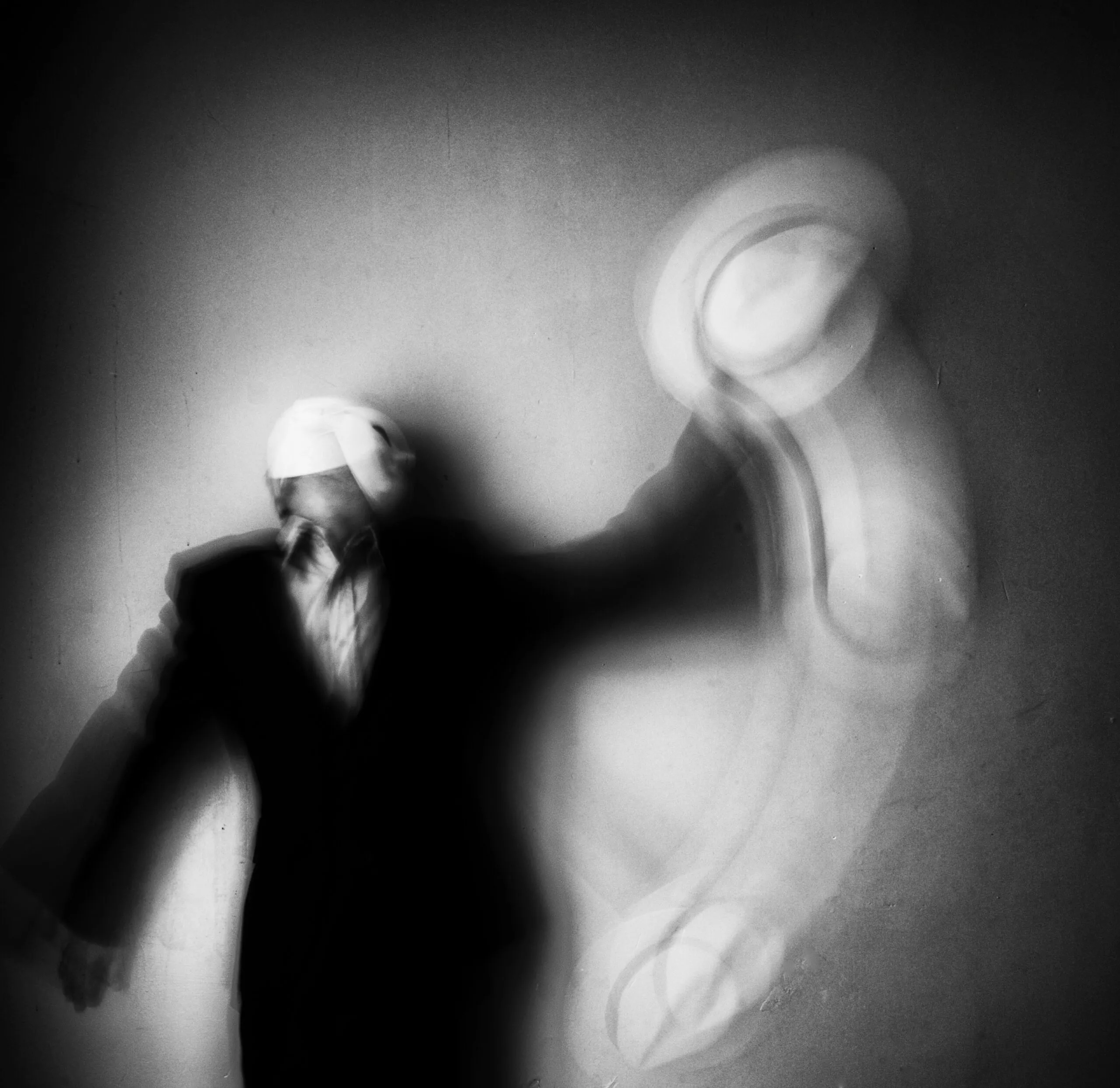
    As  well as a study in long exposure:

    copyright – Patrick

    Robert Apple delighted us with a heavy looking photograph filled with some nice bright colour red; and as noted by Rob, one “can smell the grease”!

    copyright – Robert Apple

    Another from the Argus C-four Lens

    Last but not least, Patrick reminded us of the importance of self-portraits in photography.

    Don’t forget to check the photo contest winners for the Essence of Movement; and remember, this month’s photo contest is now open for entries. The theme revolves on “Storytelling in a Single Frame“. Submit  your photos for a chance to win $250 and please don’t forget voting as well. Last but not least, keep an eye out for the Members Picks — the instructions are pretty straightforward:

    Members reference what you might consider a five star photo. Give a call out to the photographer and share their photo even if it lies in the Shark Tank and feel free to give a Critique on why it trips your Trigger. Be sure to mention the photographer and the Thread you saw it in.

    And if you want to make out the most of your LightStalking user account, make sure to check the latest posts. Also, don’t forget to swim the Mobile Monday Challenge! Last but not least, Check out the current reading throwdown, it has some nice insights and recommendations!

    We’d Love To Hear Your Thoughts

    Our Feedback Forum is a fine place for all those people wanting to grow fast as photographers. Here, you’ll get your work reviewed by well-intended photographers, but you’ll also have the chance of commenting on the work of others. We believe in the power of feedback, and here are the latest shots shared in the pool:

    The Shark Tank is a great place to learn and to discuss, but please read the instructions in order to get a better experience. Share your comments, opinions and doubts on any or all of the images above. We also will be delighted to see some of your own images. Remember all comments are given to the photographs; not the photographers. Also, don’t forget to participate in our upcoming challenge!


    [ad_2]

    Source link

  • SeaLife Shipping Red, Magenta and Yellow Filters for SportDiver Smartphone Housings

    SeaLife Shipping Red, Magenta and Yellow Filters for SportDiver Smartphone Housings

    [ad_1]

    SeaLife Shipping Red, Magenta and Yellow Filters for SportDiver Smartphone Housings

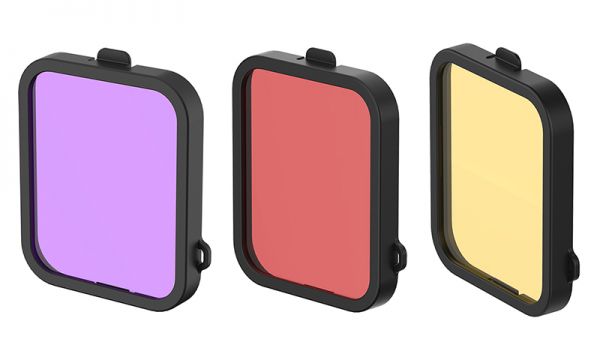
    Alongside the release of the SportDiver S, SeaLife has announced a trio of color filters that can be used with all models of the underwater smartphone housing, including the original model and the “Ultra” model as well as the new “S” model. The original red filter—which ships with the SportDiver Ultra but not with the SportDiver S—is joined by a new magenta color-correcting filter for green water applications and a yellow barrier filter for fluorescence imaging. Each filter comes with a lanyard.

    Priced at $20 each, the red, magenta and yellow are available from Backscatter and other good retailers.


    When purchasing underwater photography equipment like the products mentioned in this article, please support DPG by supporting our retail partner—Backscatter.com.


    PRESS RELEASE

    SeaLife Offers Color-Correcting Filters for Popular SportDiver Smartphone Housings

    MOORESTOWN, NJ – SeaLife, the maker of the SportDiver Underwater Smartphone Housings for iPhone and Android smartphones, has added color correcting filters to their accessory assortment including the original Red color filter for most diving applications; a new Magenta color-correcting filter for green water; and a Yellow filter is available for Fluorescence and UV Imaging, and certain blue water applications.

    The filters are designed to restore and correct for color-loss underwater, especially in the red color spectrum. They’re made of an optical acrylic that uses proprietary color pigments. The filters are most effective at depths of 10ft/3m to 60ft/18m and are easily attachable and removeable to the SportDiver optical lens frame while underwater. The filters fit all SeaLife SportDiver models, including the original SportDiver, SportDiver Ultra and the new SportDiver S.

    The color filters may be used with or without external underwater lights, depending on the shooting distance and water conditions. The filter also serves as a protective cover for the SportDiver’s optical glass port.

    A lanyard is included for attaching the filter to the housing to prevent loss.


    Item Description US Retail
    SL40007 SportDiver Red Color Filter – for most Blue water applications $20
    SL40003 SportDiver Magenta Color Filter – for Green water $20
    SL40005 SportDiver Yellow Color Filter – for UV, Fluoro Lights, Blue water $20

    SeaLife SportDiver S with red filter


    [ad_2]

    Source link